

Mention dry ice and most people picture laboratories, industrial facilities, or theatrical smoke effects
What rarely comes to mind is how frequently it sits in ordinary situations. Food arriving frozen at someone’s front door, medicine moving between facilities, restaurant cold chains and emergency cooling during load shedding can all involve dry ice somewhere in the process.
Its properties are quite unusual compared to regular ice because dry ice is frozen carbon dioxide with temperatures around -78.5°C.
Regular ice melts into water. Dry ice skips that stage and changes directly into gas, which removes some of the problems liquid can create.
People interact with the results of it every day without seeing it directly.
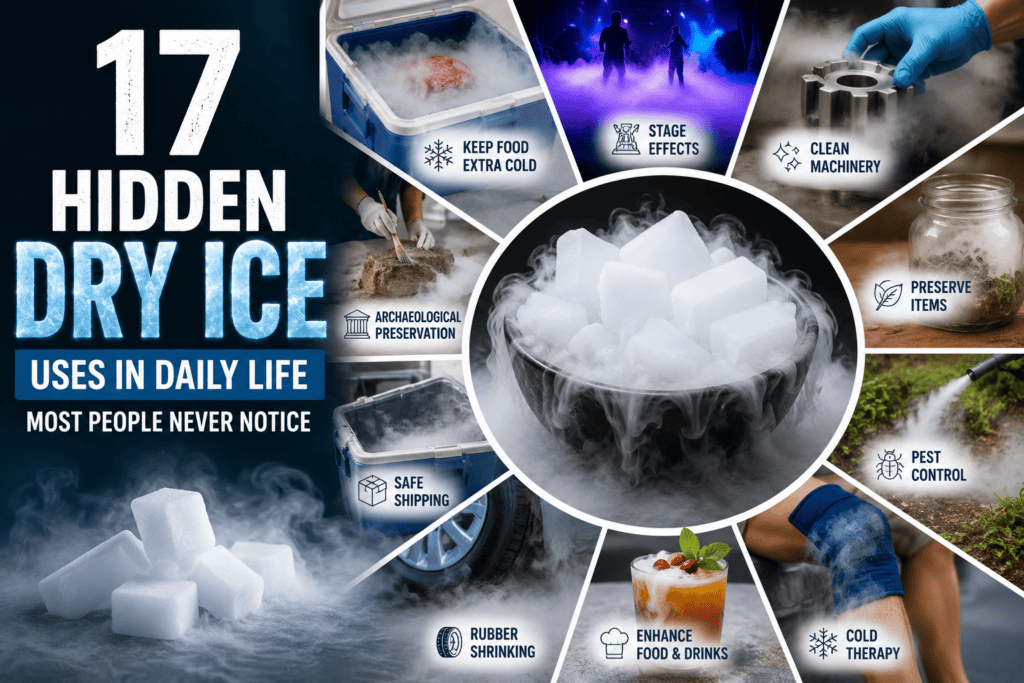
1. Keeping Frozen Food Cold During Delivery
One of the biggest hidden uses of dry ice is food delivery logistics.
Long transport times place greater pressure on temperature control, while melting ice can create additional issues for both packaging and food integrity.
Dry ice solves both problems.
It helps maintain deep-freeze temperatures for:
- Frozen meals
- Seafood
- Meat deliveries
- Ice cream transport
- Meal prep services
- Online grocery orders
As online food delivery gained momentum across South Africa, this started becoming increasingly relevant.
The role of dry ice in food transport
Frozen food cannot spend hours in changing temperatures without creating problems.
Dry ice provides lower temperatures than standard ice and works well during longer delivery periods where products need to remain stable from collection through to arrival.
Cooling Method | Temperature Range | Water Residue | Suitable for Frozen Delivery |
Regular Ice | 0°C | Yes | Limited |
Gel Packs | 0°C to -10°C | Minimal | Moderate |
Dry Ice | -78.5°C | None | Excellent |
2. Preserving Groceries During Load Shedding
In South Africa, load shedding created a surprisingly practical household use for dry ice. Many homes and small businesses now use dry ice as emergency freezer backup during extended outages.
A properly positioned block of dry ice can help preserve frozen food for hours — sometimes much longer depending on insulation and freezer size.
What matters in practice is airflow management. Opening the freezer repeatedly defeats the purpose.
We offer dry ice for sale in all metros including – Cape Town, Gauteng, Durban, Port Elizabeth.
Can dry ice keep food frozen during load shedding?
Yes. Dry ice is commonly used during load shedding or power outages as its extremely low temperature helps frozen food remain preserved for longer periods.
Freezer Size | Recommended Dry Ice Estimate |
Small Chest Freezer | 5–10 kg |
Medium Upright Freezer | 10–15 kg |
Large Commercial Unit | 20 kg+ |
3. Keeping Medical Products at Stable Temperatures
Public attention shifted towards dry ice during the pandemic as vaccines required tightly controlled transport conditions.
Its use within healthcare, however, stretches well beyond COVID-19.
Dry ice has long been used to transport:
- Blood samples
- Laboratory specimens
- Biotech materials
- Pharmaceuticals
- Organ transport support materials
- Temperature-sensitive medicine
The reason is consistency. Medical cold chains fail if temperatures fluctuate too much.
4. Cooling Challenges During an Outage
Cooling requirements do not disappear during an outage, especially where products or equipment rely on controlled temperatures. Short-term use of dry ice has become a practical option during these periods in areas such as:
- Medicine storage
- Cooler boxes during road closures
- Temporary refrigeration failures
- Event refrigeration emergencies
- Mobile refrigeration support
For small businesses, this can prevent major stock losses.
A butcher shop losing power for eight hours during summer can face severe spoilage costs. Dry ice can buy critical time.
5. Dry Ice in Restaurant and Catering Logistics
Restaurants use dry ice more often than customers realise.
Particularly for:
- Off-site catering
- Seafood transport
- Premium dessert delivery
- Mobile kitchen operations
- Event food transport
Some restaurants also use dry ice presentation effects for cocktails and desserts, although the real operational value is usually refrigeration efficiency behind the scenes.
6. Hidden Use in Online Grocery Delivery
Consumers rarely see the cooling method used inside delivery packaging.
But many premium frozen delivery systems rely on dry ice because:
- It extends delivery range
- Reduces spoilage
- Supports nationwide shipping
- Maintains product quality
Without reliable cold-chain systems, frozen e-commerce becomes difficult to scale.
7. Dry Ice for Camping and Road Trips
Campers and long-distance travellers often use dry ice for extended cooling.
Compared with regular ice:
- It lasts longer
- Keeps meat frozen
- Reduces water mess
- Supports multi-day trips
Long-lasting cooling is one of the advantages of dry ice, although there are some trade-offs involved. Certain foods can be affected by freezing conditions and skin should never come into direct contact with it.
8. Managing Food Systems Within Modern Airline Operations
Food prepared for air travel passes through a tightly managed process where temperature control remains essential.
Dry ice helps maintain food stability between:
- Preparation kitchens
- Airport handling
- Aircraft loading
- In-flight storage systems
Passengers almost never notice this part of aviation infrastructure.
9. Special Effects and Fog Machines
This is the most recognisable public use of dry ice.
When placed in warm water, dry ice creates dense low-lying fog commonly used for:
- Weddings
- Theatre productions
- Concerts
- Halloween events
- Film productions
Why does dry ice create fog?
Moisture in the surrounding air cools down around dry ice and forms the dense clouds commonly seen near the ground.
10. Dry Ice as a Pest Control Solution
Enclosed burrows are sometimes treated with dry ice because the carbon dioxide produced as it changes state can spread through underground spaces and reduce oxygen within them.
Pest management specialists handle this process rather than homeowners.

11. Emergency Freezer Backup for Small Businesses
Small businesses face major risk during refrigeration failure.
Dry ice is commonly used by:
- Butcheries
- Seafood suppliers
- Convenience stores
- Catering businesses
- Frozen distributors
Sometimes a few hours make the difference between saving or losing inventory.
Business Type | Typical Risk During Power Failure | Dry Ice Benefit |
Butchery | Meat spoilage | Maintains freezer temperature |
Catering Company | Event food loss | Temporary cold-chain support |
Pharmacy | Medicine instability | Emergency cooling |
Convenience Store | Frozen stock loss | Inventory protection |
12. Keeping Medicines Cold During Delivery
Temperature control forms an important part of pharmaceutical transport as some medicines can deteriorate when exposed to warmer conditions. Dry ice helps prevent unnecessary exposure during:
- Regional distribution
- Cross-border transport
- Remote healthcare deliveries
- Biotech shipping
Areas with warmer conditions highlight the importance of this even more.
13. Keeping Meat Fresh on Hunting and Fishing Trips
Spending several days out hunting or fishing creates a challenge once meat needs to be stored safely and kept cold.
Regular ice does the job for a limited period, though warmer weather can shorten that window. Dry ice remains cold for longer periods and can help preserve freshly stored meat when insulation is sufficient.
14. The Role of Dry Ice in Laboratory and Scientific Transport
Research facilities and laboratories work with a variety of samples and materials, some of which require extremely low temperatures from the point of collection through to delivery and testing procedures.
Dry ice is commonly used for transporting:
- Biological samples
- DNA materials
- Research specimens
- Temperature-sensitive compounds
Research and diagnostics use this infrastructure continuously, despite it remaining largely unseen by the public.
15. Cleaning Equipment Without Water
Dry ice blasting is a specialised cleaning method where dry ice pellets remove contaminants from equipment surfaces.
Unlike water blasting, it:
- Produces minimal secondary waste
- Avoids moisture damage
- Reduces downtime
- Supports sensitive machinery cleaning
This technology is increasingly used in food production and manufacturing environments.
16. Beverage Cooling and Event Setups
Large gatherings sometimes need additional cooling where drinks are being served continuously, particularly during outdoor events. Dry ice is occasionally introduced in these situations because it cools rapidly while also creating a more noticeable presentation.
Used correctly, it can support:
- Outdoor wedding venues and receptions
- Company functions and corporate gatherings
- Beverage stations
- Mobile bars
The visual effect is often secondary to the cooling performance itself.
17. Future Everyday Uses of Dry Ice in South Africa
South Africa’s growing delivery economy, ongoing power instability, and expansion of temperature-sensitive logistics are likely to increase everyday dry ice usage even further.
Dry ice is also finding its way into more everyday applications as industries continue changing and new services become more common, including:
- Food delivery platforms
- Pharmaceutical logistics
- Emergency refrigeration
- Portable cold-chain systems
- Environmentally focused cleaning technologies
The strange part is that dry ice could become increasingly important while receiving less recognition from consumers. Critical systems usually blend into daily life, only drawing attention once something stops working.
Frequently Asked Questions
Is dry ice safe to use at home?
Yes. Dry ice does not present a problem when sensible safety measures are followed. Skin should never come into direct contact with it, and enclosed spaces should be avoided due to the carbon dioxide released as it changes state.
How long does dry ice last?
How long dry ice lasts is influenced by more than one thing. The quantity being stored, surrounding airflow, and storage conditions all have an effect. With insulated containers, dry ice can remain for several hours and sometimes continue lasting for multiple days.
Can dry ice replace a freezer?
Not for permanent use. Dry ice is used as a temporary cooling method and works best over shorter periods.
Is dry ice better than regular ice?
Deep freezing and transport cooling are areas where dry ice performs well because it stays colder for longer. Drinks, cool boxes, and typical use are usually where regular ice makes more sense.
Why is dry ice used in medical transport?
Dry ice helps preserve medicines, samples and other medical materials at extremely low temperatures while removing the risk linked to water contamination from melting ice.

